
A Kathayan Knowledge Journey · Chapter 05
Vikramshila
Vikramshila Mahavihara (Antichak) · Bhagalpur district, Bihar, India
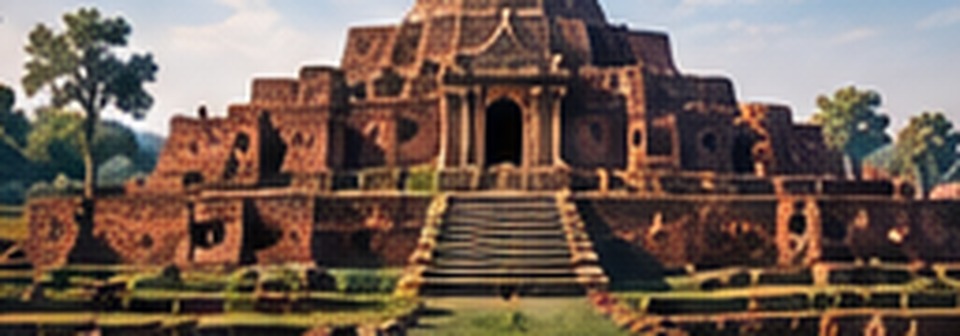
Vikramshila Mahavihara — its founding under Pala patronage, academic organisation, principal subjects, Buddhist philosophy and Vajrayana studies, scholars including Acharya Dipankara Shrijnana (Atisha), its influence on Tibet and beyond, and its decline — closing with a reflection on why this knowledge tradition still matters.
Historical context
Vikramshila was founded when Nalanda was already old. It became the Pala period's leading centre for tantric and philosophical study, and the place from which Indian Buddhism travelled most directly into Tibet.
Story narrative
Established under King Dharmapala, Vikramshila was laid out as a large monastic square around a central shrine — a plan recovered in excavation at Antichak in Bhagalpur district. Cells for monks ran along the sides; a library and teaching halls stood within the enclosure.
Its scholars were examined and appointed, and its senior teachers held recognised gate-keeping roles. Among them was Dipankara Shrijnana, known as Atisha, who left for Tibet in the eleventh century and reshaped Buddhist practice there. The transmission ran both ways: Tibetan translations preserve Indian texts whose Sanskrit originals are lost.
Vikramshila ended with the other Pala mahaviharas in the late twelfth or thirteenth century. The site at Antichak was excavated in the twentieth century and is protected today. Its closing lesson is the one this journey began with: institutions are fragile, but what they transmit can outlive them.
Timeline
Late 8th–early 9th century CE
Founded under the Pala king Dharmapala.
9th–11th century CE
Becomes a leading centre of philosophy and Vajrayana study.
1042 CE (traditional date)
Atisha Dipankara Shrijnana travels to Tibet.
Late 12th–13th century CE
The mahavihara is destroyed and abandoned.
20th century
Excavation at Antichak recovers the monastic plan.
Map & location
The excavated square monastery with a central cruciform shrine is protected by the ASI.
Important personalities
Dharmapala
Pala ruler credited with founding Vikramshila.
Atisha Dipankara Shrijnana
Scholar of Vikramshila whose journey to Tibet reshaped Buddhism there.
Ratnakarashanti
Philosopher associated with the mahavihara's teaching tradition.
Fields of learning
- Buddhist philosophy and logic
- Vajrayana and tantric study
- Grammar and Sanskrit literature
- Translation and text transmission
Historical sources
Tibetan sources and translations
Preserve the teaching lineage and texts carried north from Vikramshila.
Excavation at Antichak
The square monastery plan, central shrine and monk cells recovered in the ground.
Pala inscriptions
Evidence of royal endowment and the institution's standing.
Key facts
- Founded
- Under Dharmapala, late 8th–early 9th century CE
- Best-known scholar
- Atisha Dipankara Shrijnana
- Site today
- Protected excavated remains at Antichak, Bhagalpur
Glossary
- Vajrayana
- A later stream of Buddhist practice using ritual, mantra and meditation methods.
- Mahavihara
- A large monastery functioning as a residential centre of higher learning.
- Antichak
- The village in Bhagalpur district where the Vikramshila remains were excavated.
References
Visual Edition
Unavailable before 01 January 2027.
Originally released on the official VMN News YouTube Channel.