
Production and income are different questions
A crop leaving a field still needs to reach a buyer in a usable condition and on workable terms. Sorting, transport, storage and marketing can become part of that journey. This is an explanatory framework, not a claim that every farmer follows one chain or faces identical costs. An agricultural discussion that ends at the harvest misses these later decisions. Producing more and earning a dependable livelihood are related, but they are not interchangeable measures of success.
NABARD’s March 2015 primer on Farmer Producer Organisations describes the constraints of dispersed smallholders and the role of collective organisation in market participation. It provides historical institutional context. It should not be used as a current count of FPOs or farms. The central idea is still worth examining: individual production units may need shared arrangements to engage with services and buyers that operate at a larger scale.
Source context: NABARD
Be precise about small holdings
The Agriculture Census 2015–16 report records the number and area of operational holdings. An operational holding is land operated as a technical unit; it is not necessarily the same thing as legal ownership. The distinction matters when discussing farm scale. A historical census can establish its own baseline without describing the situation in 2026. This article therefore uses the census for definitions and structural context, not to present an old percentage as a current national fact.
Our interpretation is that small scale changes the economics of using equipment, arranging logistics and negotiating transactions. It does not mean that every small holding is unproductive or that one model fits every crop. The relevant question is where sharing services can help and where local conditions demand a different arrangement. Scale is one factor among water access, crop choice, distance to markets and institutional support; treating it as the sole explanation would oversimplify agriculture.
Source context: Government of India; hosted by FAO
Water risk has a local geography
FAO’s India project description distinguishes rain-fed farming, which depends primarily on rainfall with little or no irrigation, and discusses natural-resource pressures. The project ran from June 2019 to December 2021; its context should not be turned into a new nationwide measurement. Rain-fed and irrigated areas face different planning conditions. Even within either category, soil, rainfall timing and local water systems can vary. No single technology can be inferred from this source to solve every water-related constraint.
Source context: FAO India
Collective institutions need more than a name
An FPO can provide an institutional route to aggregation and market participation. But forming an organisation and operating a dependable business are different achievements. NABARD’s primer helps explain the organisational idea; it does not guarantee a higher price or income for every member. Our analysis is that governance, member participation and workable buyer relationships deserve attention alongside registration. A collective needs to make decisions, maintain trust and sustain services. Without those conditions, the label alone cannot resolve the economic problem it was created to address.
Source context: NABARD
Infrastructure should fit the crop and the market
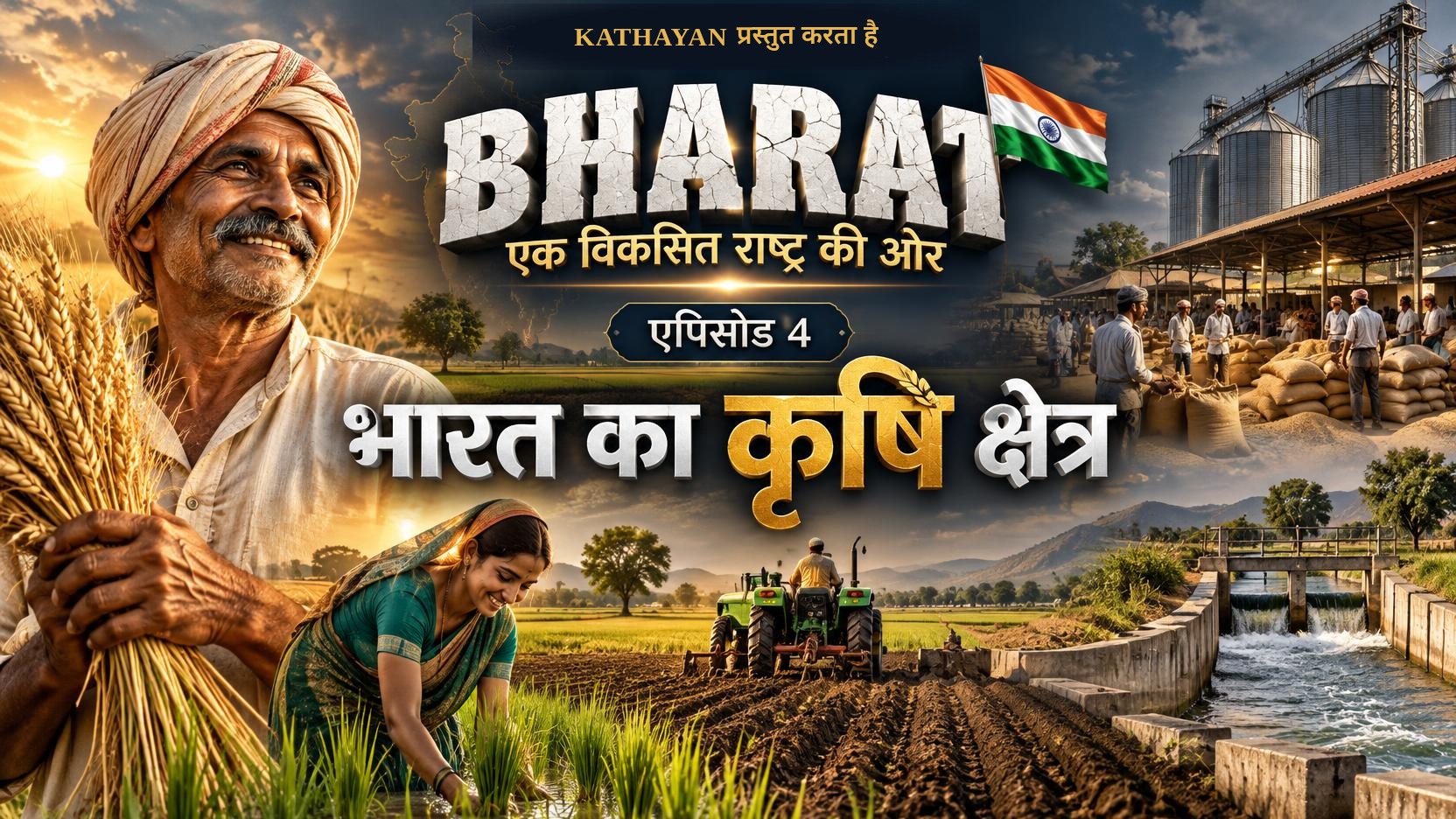
BHARAT Part 04 follows farming beyond food production towards value chains and enterprise. This companion interpretation asks whether proposed infrastructure fits the actual crop, volume, location and buyer. Storage without a workable onward market, or a marketing promise without reliable logistics, may leave another gap in the chain. These are planning questions, not measured outcomes from the cited sources. Drones, digital platforms and irrigation equipment should similarly be evaluated for a specific use, rather than treated as symbols that automatically raise farmer incomes.
A development story with room for farmers’ choices
The challenge is to connect land, water, institutions and markets without pretending that India has one uniform farming economy. Better explanations preserve differences between regions and production systems, and distinguish programme ambition from demonstrated results. The episode opens a broad conversation about agricultural change; this essay adds questions about the chain that makes change viable. It offers context, not instructions on crop selection, investment or borrowing. Farmers’ choices and local evidence belong at the centre of any assessment of what development means on the ground.
Source context: Government of India; hosted by FAO · NABARD · FAO India